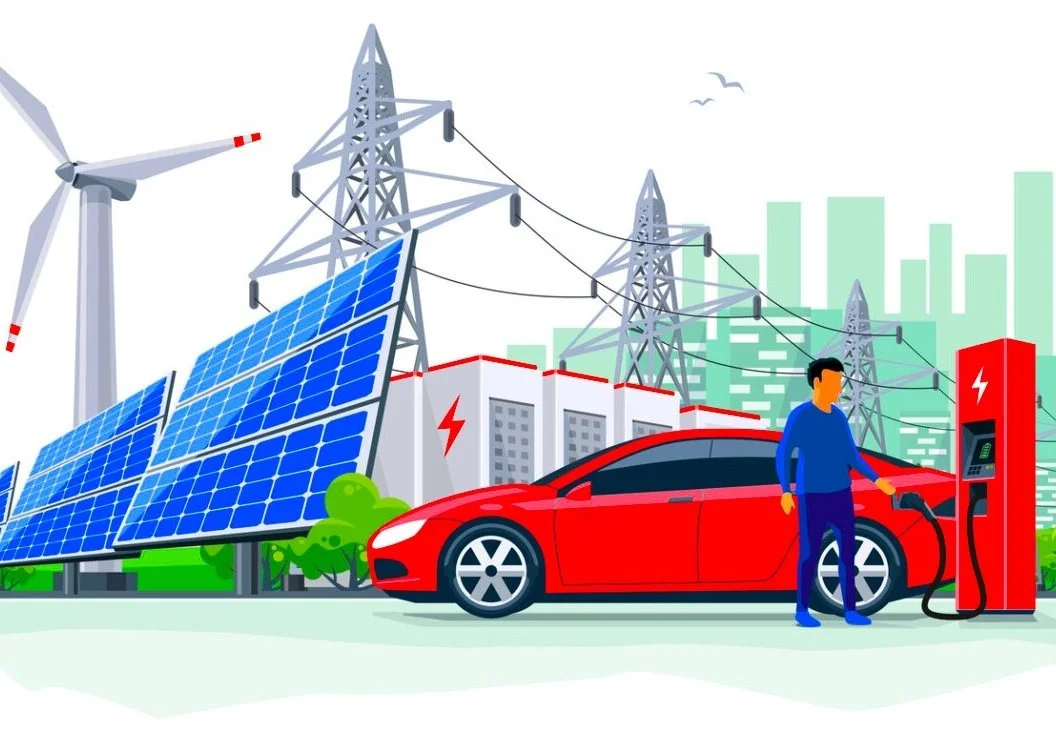
Fostering low-carbon growth

Here’s a great video of a speech delivered by Lord Nicholas Stern and sponsored by the International Monetary Fund (IMF) and World Resources Institute (WRI). Lord Stern, who is the chairman of the Grantham Research Institute on Climate Change and the Environment at the London School of Economics, explained how climate risks have changed six years after the publication of the Stern Review report, and what organizations and governments can do to transition to a low-carbon economy future. For more, check out the transcript of the speech and IMF Managing Director Christine Lagarde’s introductory remarks, and Stern Review .

Does unemployment rate mirror stock markets movements?

For those interested in the relationship between equity markets and unemployment, here is an interesting chart by The Economist that sums up that ‘synching feeling’.

One thing is clear, producing goods in cheap labor markets and exporting them to high valued economies only end up eroding long-term viability of these advanced economies. Therefore, even if the action is highly profitable and looks good on the balance sheet (to outsource production of some goods to cheap labor markets), this is but a short-term solution with serious long-term economic consequences.
stockmarket_and_unemployment
In other news:
WSJ: Chained CPI, stocks and unemployment, imports
CNBC: Stock market to navigate negatives of earnings and economy

How the art and science of delivery is changing

As the payoff from investment in advanced-analytics management and big data revolution becomes real, the art and science of delivery is on the upswing as institutions share knowledge, tools and experience in problem solving. For instance, public policy institutions are full of good ideas on how to solve complex social problems, improve STEM pedagogy and student learning, cure diseases, and produce energy (at scale, efficiently, and sustainably). But what has been missing in this process is the ability to implement simple, pragmatic and scalable solutions to effect positive social change. This seems to be changing, pretty fast, however, as organizations integrate their stovepipes of data across operations and sectors to provide powerful insights.

Speaking at this year’s annual meeting plenary session, World Bank Group President Jim Yong Kim addressed the facts and processes germaine to the next frontier in advancing the science of delivery. “Effective delivery demands context-specific knowledge. It requires constant adjustments, a willingness to take smart risks, and a relentless focus on the details of implementation,” he observed.

McKinsey has also developed an anthology of leading delivery models by social thinkers and practitioners in health care, smart energy, financial services, governance, and food security to improve development outcomes.

Which is more efficient – wind or solar energy?

The question of efficiency when comparing wind and solar forms of alternative energy is on the minds of many people these days. Government officials, state legislatures, entrepreneurs and average citizens want to know the answer to this question. The general feeling is that wind is more efficient, though the answer turns out to be dependent on the scale of operation involved in a comparison.

For a homeowner in a rural area who already has tall buildings, such as barns or grain silos, or even an existing old windmill, wind is easily more efficient. For larger applications, such as commercial generation of electricity to provide power for urban areas, the answer might surprise you.

Ending in 2011, a comparison test, between solar and wind powered energy, ran for 14 months. The comparison showed that solar power is more efficient.

To make sure the test was a fair comparison, a wind turbine set at an elevation of 35 feet was compared with a panel of solar collectors. As a control, it was verified that both could produce an identical amount of electricity at conditions considered optimal. The cost of each system was identical.

The result of the test was rather surprising. Over a number of testing periods, the solar powered generator was able to produce a total of 500% more electrical power than the wind powered generator. This was not expected, due to the fact that the solar system was dependent on the appearance of the sun to begin generation. It was determined that the intermittent and varying intensity of wind was the reason for the wind powered generator to produce less power.

Considering the vast amount of research being conducted worldwide on both types of alternative energy generation, it can be expected that the efficiency of both systems will increase in the future. There are several new designs of wind powered generators under development that require less wind to start operation and continue to generate electrical power. For solar technology there are also exciting developments. In addition to the development of much more efficient solar collectors, research at MIT has discovered a way to place solar collectors in non-horizontal arrays. The discovery is based on the natural way a tree develops leaves as it grows, and the mathematical principle of Fibonacci numbers. Tests are underway that could more than quadruple the amount of electrical power per square foot of solar panel installation that can be achieved.

Because of the exciting developments in both forms of alternative energy sources, it is hoped that government, private industry, such as Texas energy providers, and individual citizens, will continue to explore, research and discover even more ways to improve the efficiency of these two important non-oil sources of electrical power.

Who’s leading the low-carbon race?

The centre of clean energy gravity is fast shifting to Asia, with China taking the lead. In a new report developed by Australian think tank The Climate Institute and GE, China has improved its global low-carbon competitiveness index significantly.

The report ranks France, Japan, China, South Korea and the UK in the top five positions. China has leapt ahead of its previous ranking from 7th to 3rd while U.S. is now 11th down from 8th position. Australia is ranked 17th. The report attributes the latest decline in U.S. ranking to “lower public equity investment in clean energy, shrinking high-tech exports and a surge in reliance on emission intensive air freight.”

LCCI2013a

China’s growth in cleantech investment is boosted by high-tech exports and a rise in global public equity investment in clean energy. Read more


The power of big data in a networked world

David Rogers, Executive Director of BRITE conference, which stands for brands, innovation and technology, hosted by the Center on Global Brand Leadership at Columbia Business School, discusses the challenges and promise of big data and how companies can master it to drive innovation and generate customer insight.

Nations urged to combine environmental and development goals

World leaders should set six goals around universal clean energy, an end to water and food shortages, thriving lives and livelihoods, and healthy and productive ecosystems, they say.

New center formed to set standards for shale gas development

Leading environmental organizations, foundations, and energy firms have teamed up to form a new center that will set standards for shale gas development and drilling by hydraulic fracturing in the Appalachian Basin.

The center to be known as Center for Sustainable Shale Development (CSSD) has leading organizations as founding participants such as Shell, Heinz Endowments, Citizens for Pennsylvania’s Future (PennFuture), EQT Corporation, Pennsylvania Environmental Council, Chevron, Clean Air Task Force, CONSOL Energy, Environmental Defense Fund, Group Against Smog and Pollution (GASP), and William Penn Foundation. Read more